
From our previous apps we were pretty good at getting users from TikTok — especially couples. And couples had higher LTV.
So we came up with a simple content app for couples — questions, games, little tools that help partners learn more about each other and diversify their relationship. We got early users, but it became clear it was more of a nice-to-have than a real solution.
Around that time I was going through a tough period in my marriage: we even considered divorce, and my wife and I went to a family therapist. Therapy overall helped, but the process itself — and the quality of the specialist — raised many questions.
All of that pushed us to build something more serious, something that genuinely helps people. That’s how the AI therapist LovOn was born.
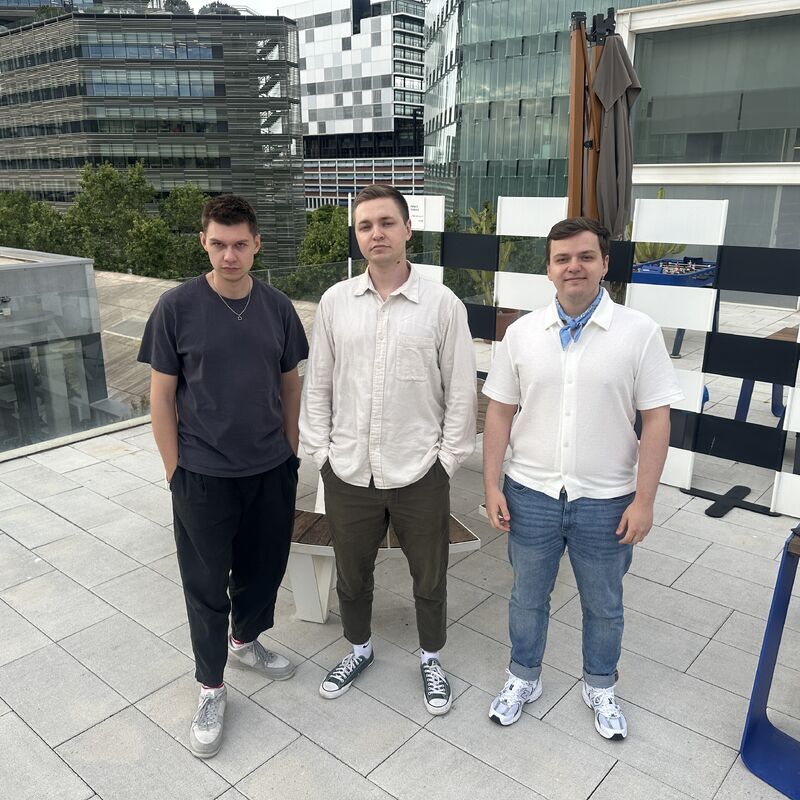
There are three of us: me (CEO), Kirill Ilichev handling marketing, and Anton Ponikarovskii — our tech and product lead. We’ve known each other since 2016: studied together, even lived in the same dorm. After graduation we immediately started building things: first small apps, then something more serious — the music app MUBR.
We bootstrapped MUBR entirely, grew it to 3M installs, and eventually sold it.
We had some income from previous small apps — we put all that into MUBR. We also worked full-time jobs: days at work, evenings and weekends on the startup.
It worked fine: we were shipping quality product and didn’t really need outside money. Fundraising only makes sense when you must accelerate growth and can’t do it without capital — but our marketing and experiments let us grow without VC money.
If you can bootstrap — bootstrap.
But of course, if you’re in a niche where marketing is insanely expensive, doing it without capital is suicide. Or if you’re building something deeply technical that you simply can’t develop yourself… though personally, I wouldn’t start a product I couldn’t build myself.
As soon as we built the MVP and got the first feedback, it was obvious: to scale, we needed a bigger budget. And we didn’t want to go back to full-time jobs just to finance the startup, like we did with MUBR.
I actually raised the first checks before launching the product — $75K from angels.
No, so the fundraising was pretty hard. All in all it took about six months.
I had previously worked in large IT companies, and Kirill and Anton are strong mobile specialists — so we had a broad circle of industry acquaintances. We met investors at conferences, and some people knew us from our previous apps.
First, I built a pitch deck: worked on the narrative, wrote everything out. I ran it by a couple of founder friends, got feedback, edited it a few times.
Then I created a list of potential investors — basically a CRM in Google Sheets with everyone we could possibly reach.
Yes. I literally started messaging and calling everyone I knew — anyone at all. I went through all my LinkedIn contacts: searched “VC,” “Angel,” looked at second-degree connections. If the contact was close — I asked for an intro. If it was just a loose acquaintance, I started from far away: small talk, offering help, trying to provide value first and then ask for a connection.
I used my entire industry circle.
When the “warm” contacts ran out, I expanded further. I looked into Telegram groups, vertical communities. We lived in Cyprus then — there’s a great founders’ community there, Founders CY. I joined and started messaging investors and founders at similar stage. It was almost cold outreach — but at least we shared a community, so it wasn’t fully cold. Any warm context worked much better than true cold outreach.
I did cold outreach myself, and here’s what I learned:
an hour spent on cold outreach gave 10× worse results than an hour invested in even a slightly warm contact.
From pure cold outreach I didn’t close a single investor.
Though, there was one lucky case that sparked a whole chain of investments. Anton had a list of partners from his corporate job. I emailed them:
“Hey, I’m also from [company], building a startup…”
This got us one check — from a person who had barely invested before. He then introduced me to another angel, who also invested. Later we learned that this angel had an LP from a fund — and that fund later invested in us too.
So even that random shot grew into a chain of intros.
But out of 1,000+ cold emails, this happened exactly once.
I took fundraising entirely. The guys worked on product and marketing.
It was clear I wouldn’t close the round in two weeks — we prepared for a long grind. So I spent 80–90% of my time on fundraising, and the remaining 10–20% on strategic product help. Spoiler: you can’t really combine the two.
I tried my best not to distract the guys — I only pulled them in when investors needed data or when it was time for final calls where the whole team mattered. The rest of the time I just updated them on progress.
Fundraising steals focus. Better if one person — the CEO — is fully dedicated, instead of the whole team doing it half-heartedly. Doing it “part-time” is a terrible idea.
In reality, I had four CRMs:
1. Potentially interested investors
People we’d talked to, crossed paths with, or who simply seemed like a fit.
You need to keep them warm, maintain FOMO. I sent regular updates — what was growing, which investor recently joined. Just to stay in their heads for the next IC meeting.
2. People we’d already spoken with
You also ping them regularly, remind them we exist:
“We just shipped this,”
“We improved that,”
“We have an upcoming IC with this fund — FYI.”
This is all about warming and retaining attention.
3. People who can make intros
Not necessarily investors.
4. People I owed something to
Send data, send metrics, schedule a follow-up, rework the pitch, circle back in a week. If you mess up here — the lead is dead. Fundraising = trust. If you don’t fulfill promises, the tab with your name closes forever.
My day literally looked like:
“Okay, where do I find more people for each of these four CRMs?”
This is what takes all your time. Literally all of it.
I wouldn’t say they dislike them. Especially nowadays — with the whole vibe of “solo devs building everything” — you can build alone. They dislike lack of growth. And you can’t grow if you spend 24/7 fundraising.
Fundraising requires density of communication. You need to have as many meetings and calls as possible in a short period. We noticed that when I had weeks with 5 calls per day, by the end of that week it almost felt like “everyone in our niche knows me.” That creates momentum.
If you stretch the same number of calls across six months — no focus, no momentum — it won’t work.
I tried. We sent maybe 70–80 applications to all kinds of programs. You know how many said yes?
One.
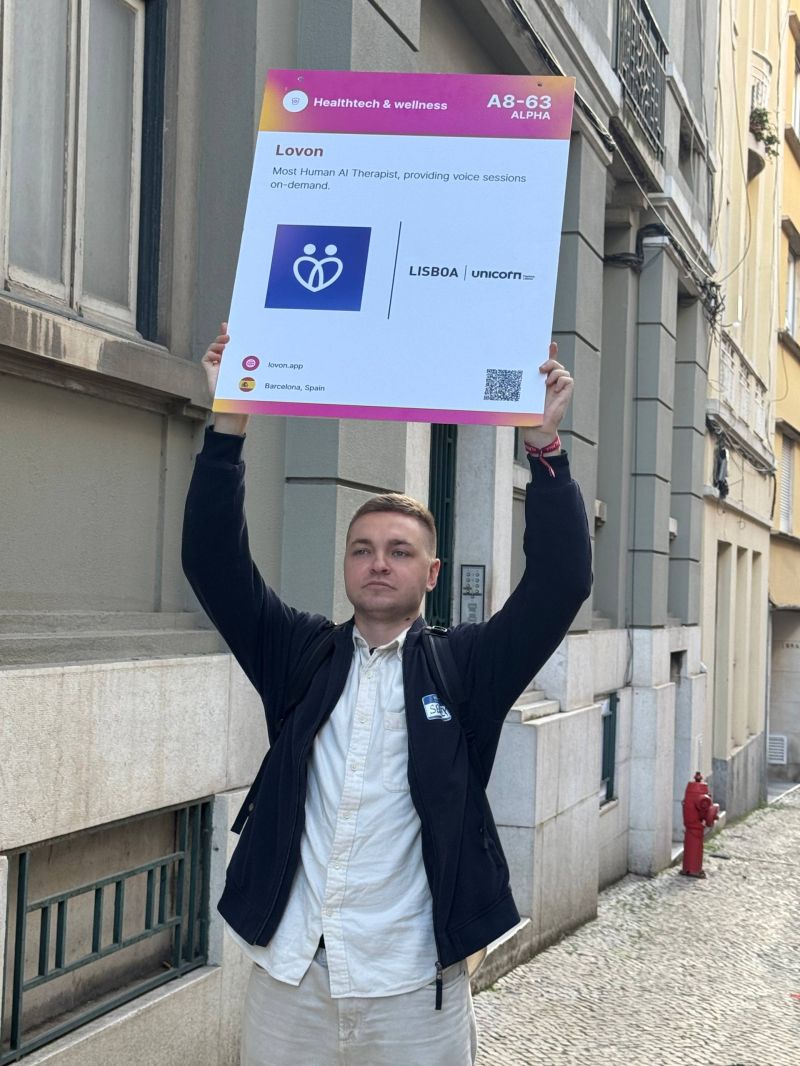
And that was an accelerator in Lisbon (Unicorn Factory Lisboa). They accepted us because they already knew us personally. At the demo day there I met someone who later recommended us to our future lead investor. So at the end, it was worth the trip.
But in general, accelerator applications didn’t work. If you don’t have strong traction or a warm intro, chances are low. We were applying with almost no numbers. We were writing things like “$100 MRR” — even I thought it looked ridiculous. Obviously accelerators prefer teams with better momentum.
Accelerators — like investors — either want to see growth or get you through someone’s recommendation.

The best intros come from people who genuinely want to help you.
And people genuinely want to help those who have helped them earlier.
Some people are so awesome they get genuine intros without giving anything first — but I wasn’t that awesome. So I just helped everyone I could. And sometimes they helped me back.
I met with many founders; some of those meetings turned into investor meetings. But funds still rejected us early — maybe I pitched badly, or pitched the wrong things.
I also noticed something:
intros from people who already invested in us worked best.
When an investor hears about you from another investor who already trusted you — your perceived trust level skyrockets. That’s why I always asked every new angel:
“Thanks for believing in us — is there anyone else you think we should show this to?”
And many of them really did introduce us to their friends.
Around $200K in small checks — but from very strong angels, well-known in the industry. Including a couple from the U.S. I guess I’m good at selling.
And almost all of these checks came through intros.
We also traveled to events — WebSummit brought us lots of contacts.
Not really.
At conferences you need to talk a lot to find one useful person who later will give you a valuable intro.
And it rarely works directly. We almost never received an investment from someone we met at the event. More often it came from someone they introduced us to.
But yes, at WebSummit a few angels gave us checks right there. I also met a few funds — they rejected us at the time, but later, when we had new commits, I came back, and they joined the round on different terms.
Conferences help broaden your network — but they are time-consuming. I wouldn’t bet everything on them.
There were a lot of calls. And yes — sometimes investors would say:
“Guys, don’t even try, it’s not going to work.”
Some were clearly boosting their ego by tearing our project apart.
But truly toxic calls were rare — maybe 5–10%.
Around 50% were “clear no, but polite.”
Most were neutral-positive: they listened, asked questions, no negativity — but no spark.
And maybe 5–10% were the “wow, this is interesting, let’s talk further” ones.
You need to accept that most calls are “no,” and that’s normal. A couple of “yes” is enough. Fundraising is statistics.
Psychologically, it gets hard — especially after 10 rejections in a row. But what kept me going was this tactic: find positivity anywhere to balance the negativity.
If things got really bad, I’d go ask the guys:
“So, what’s good on the product side?”
And they’d say: “Our metrics grew this week!”
Immediately my mood would jump:
“These investors will regret rejecting us.”
Or we’d get a new angel check — and instantly I’d feel energized:
“One more believer. Let’s keep going.”
One good call or news could erase ten bad ones.
Yes. There was a fund I really wanted in our round. They were top-tier, great people, and strategically perfect for us.
We went through many stages with them — almost to the finish line. They were excited. I thought: “This is it!”
And then the final call went badly.
I think I poorly prepped the team: their partner asked slightly different questions than we expected, and we answered unconfidently. We raised a few orange flags.
They rejected us on the final stage.
I was upset — a lot of effort went into that.
But there was a positive twist:
their GP still invested personally as an angel.
So the fund didn’t join, but the general partner said:
“I like you guys — I’ll invest my own money.”
Later, he also helped with intros and advice.
So even that failure turned out valuable.
Then December came, everything slowed down — holidays, no lead investor. And I realized: something has to change. I needed a shake-up.
So I went all-in.
I flew to the U.S. to raise.
I literally just bought tickets and went — even though I’d never been there before. My logic:
“Screw it. Silicon Valley, top funds, lots of money — maybe it’ll work.”
In December I got a visa (just in case), thanks to a friend who helped me prepare everything.
In January I landed in San Francisco.
I had quite a few meetings there too. Some old friends from university who had moved to the U.S. helped me with intros.
But in the end, I didn’t close a single U.S. investor.
However — that trip changed me.
I became much more confident. My pitch became more global, bolder. And I think the fact that I flew across the ocean made some European investors take us more seriously:
“He’s not stopping at anything. He even went to the U.S. to push this.”
It gave us extra credibility.
And while I was in the U.S. — the remaining checks came in, and we closed the round.
At the beginning — almost none.
We were stuck at <$500 MRR. That’s not validation for investors.
But we had some signals: strong early retention, happy users who came back. We found angles to present our few metrics in a compelling way.
Closer to the end of the raise, we squeezed everything we could out of the product. While I was fundraising, my co-founders doubled metrics every month.
Some people laughed:
“Well, doubling from $500 isn’t hard.”
But I came back a month later:
“Look, another x2. And another x2 next month.”
By the third month no one was laughing — and we closed three funds at once.
If you break it down:
• strong team
• good storytelling
• the right mindset
• and a huge market that amplified everything
We showed that it’s a large, growing space where people pay, and we can create real value. Without that, nothing else would’ve worked.
Honestly, our startup — by VC standards — wasn’t super sexy. Not deep tech, not a hyper-hot space. Objectively maybe 5 or 6 out of 10.
But we had many solid facts — and I built a compelling story around them, so sometimes it looked like 8–9 out of 10 in investors’ eyes.
And we genuinely hustled.
The first $75K helped a lot: we basically burned it to show growth. And I think it was worth it — we proved we could grow and that people wanted the product.
We also made an unusual move: brought in a well-known family psychologist, Dr. Daniel Kriegman, as scientific advisor.
All of this caught the attention of the Pre-Seed to Succeed program (AltaIR, YellowRocks, etc.). They ended up leading the round with a much bigger check than typical for pre-seed.
After that, a German fund — who had rejected us earlier — came back when they saw we had a lead. Suddenly everything clicked.
Honestly, I could’ve raised more after that — but I was completely burnt out. So we stopped at ~$850K and closed the round.
1. Get ready to hear “no” constantly.
Rejections will be endless — and they’re not personal.
Investors have math: risk, return, fit. If something doesn’t add up — they say no. That’s it.
Your job is to go through the “no’s” to find the “yes.”
If you persist — you’ll get the money.
Someone told me a phrase I loved:
“The goal of fundraising is to collect 150 rejections on calls. Not emails.”
If you can live through those 150 “no’s,” you’ll very likely get your “yes.”
I didn’t reach 150 — I got the money earlier.
2. Start with angels.
Angels sometimes invest “for the vibe” — on your energy, your team, your vision.
One angel literally told me:
“I know this might not become huge. But I like living this life — helping cool founders, being part of the ecosystem.”
Angels care more about people than metrics.
Close a few angels first — even small checks. That’s already a win. Then leverage their names and intros to get to funds.
VC eyes light up when they see familiar names on your cap table.
3. Technical advice: incorporate as a Delaware C-Corp right away.
Don’t complicate things.
Our first startup was incorporated in Cyprus — massive headaches later.
If your goal is venture capital — set up the right structure immediately.
4. Keep a positive mindset.
Fundraising is a marathon of rejections.
But you only need one win. Don’t fear losing a hundred times — one win outweighs them all.
To survive until that win, you need to be a bit of a stubborn optimist. All successful founders I met had this trait.
Tell them “no,” and they smile:
“Well, the next one will say yes.”
This mindset helps you go through all circles of hell and finally raise your round.
If you truly want it — and don’t stop — you’ll get there.
Exactly.
I honestly believe almost anyone can raise.
The question is: how badly do you want it?
How much time, energy, and stress are you willing to pour into this?
If you can hustle for six months, hear “no” every day, and still not lose your spirit — you’ll raise.
Because with every call you learn something that sharpens your next pitch. Your storytelling evolves, your framing improves, your confidence grows. Your odds increase.
The strategy will be roughly the same.
Except now we have traction — we reached $250K ARR, built stronger investor trust. In the next round I’ll focus less on angels and more on funds. My pitch will be more global, more ambitious.
Now we actually have something to show: strong growth, solid metrics, users paying, good retention. Early signs of PMF.
So this time I’ll speak to funds more in the language of data.
Want to discuss this interview or thank Sergey for sharing his story?
The best way to support Sergey — and help more founders see this interview — is to leave a comment.
👉 Join the conversation here
We’d love to hear your thoughts, takeaways, and questions.
Check out the profile to see their latest milestones and subscribe to stay in the loop with all their updates!
Inspiring founder stories you can’t miss!


.jpeg)

.jpg)
.jpeg)

.jpg)
%20(1)%20(1).png)
.jpg)
.jpg)
.jpeg)


.jpg)

.png)


.jpg)
.png)


%20copy.jpg)


.png)